


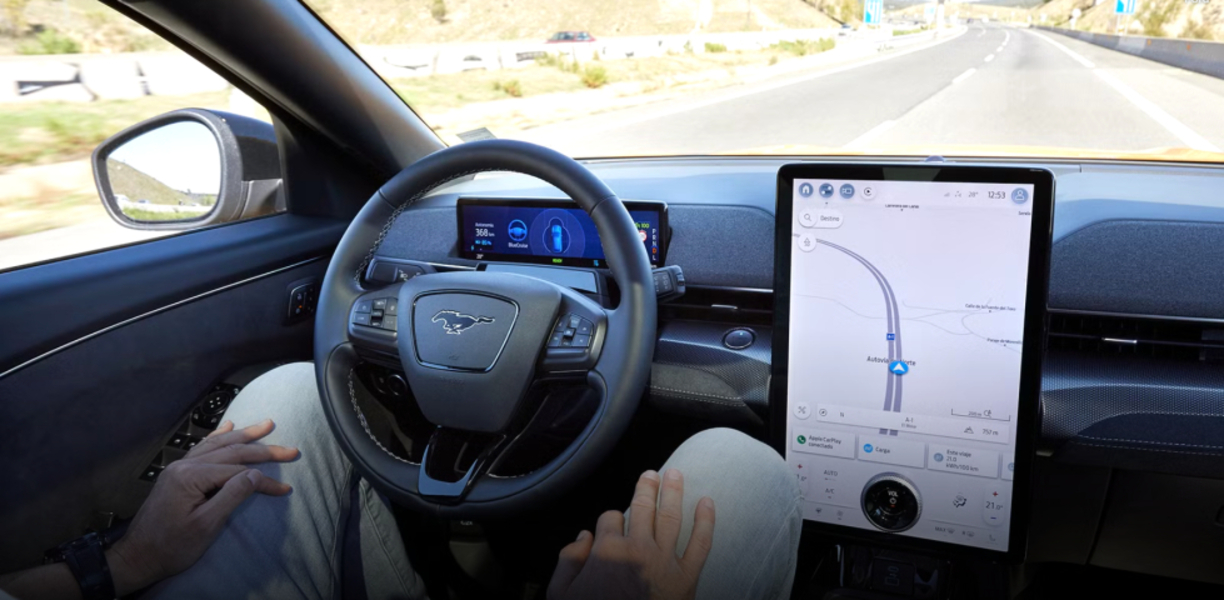
Global auto giant Ford has outlined plans for autonomous mobility, revealing a roadmap at CES this year to reach “hands-free, eyes-off” driving by 2028.
Laying out the US auto major’s plans, Doug Field, Chief EV, digital and design officer at Ford, also revealed plans for an AI assistant and a new “vehicle brain” module, among a host of new developments that came out of CES (Consumer Electronics Show) held in Las Vegas this month.
Under the new timeline, Ford is following in the footsteps of global leaders Tesla and Rivian, promising Level 3 autonomy in its vehicles as early as 2028.
The Michigan-based automaker is launching its own autonomous platform, called the Universal Electric Vehicle platform, as the foundation for its eyes-off capabilities. This software will support Ford’s latest electric pickup, which is expected to reach production in 2027 — a vehicle Ford claims will retail for about $30,000.
Ford said this price tag reflects its commitment to providing autonomy for the masses, not just a select few.
Field championed the importance of democratising vehicle technology, saying: “If a feature doesn’t solve a real problem or make you smile, customers shouldn’t have to pay for it. Truly impactful technology must be attainable. If it doesn’t reach the many, it isn’t a revolution — it’s a luxury.”
Launch of all-new Ford “vehicle-brain”
The other landmark announcement delivered by Ford at CES was the launch of its all-new “vehicle brain”. The technology brings together infotainment, ADAS, audio, and networking into a single unified platform. The “brain” allows Ford to cut manufacturing costs by bypassing outside suppliers, meaning many of its new vehicles could be delivered at roughly 30 per cent lower cost than current offerings.
Alongside this platform, Ford is rolling out its own AI assistant, which will operate via the Ford and Lincoln app later this year.
Speaking about the benefits of leveraging in-app features, Mike Aragon, president of Ford’s Integrated Services software business, said: “You shouldn’t have to wait to buy a brand-new vehicle to experience the future of Ford intelligence. With an in-app launch, we can deliver advanced features and personalized assistance to the Ford you already own.”
Ford’s strategy on autonomy follows the walk-back of its promise to deliver an all-electric line-up by 2030, a revision that was announced at the end of last year.

