


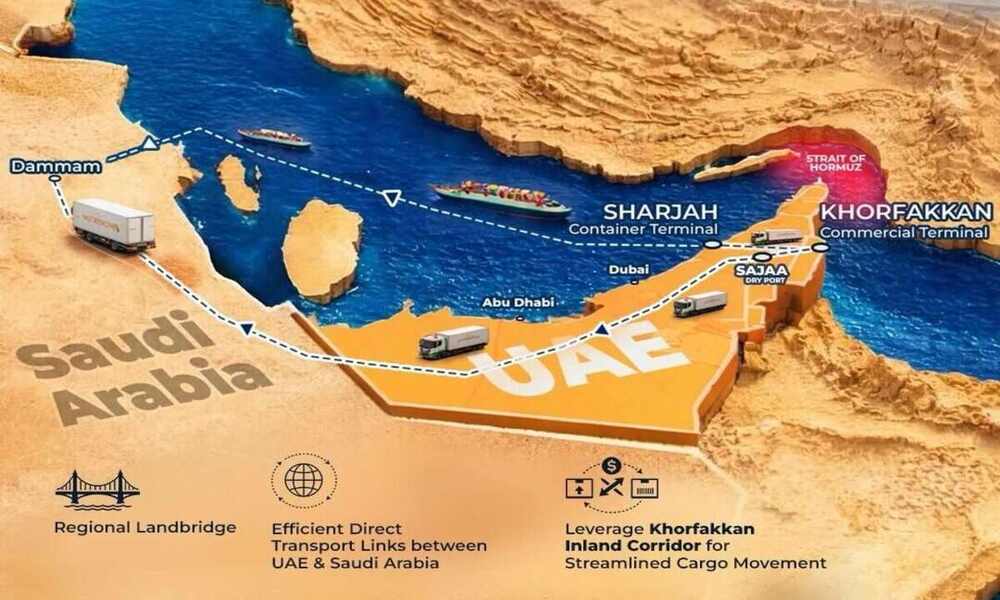
The UAE and Saudi Arabia have unveiled a new trade bridge designed to improve the movement of goods between the two countries by bypassing the troubled Strait of Hormuz which is currently affected by the US-Iran conflict.
Announced by Saudi Ports Authority (Mawani) in partnership with Gulftainer, the initiative will connect Sharjah’s Khor Fakkan port with Dammam on the Saudi east coast through a combined land and sea logistics network – and is being said to mark another step towards stronger regional economic integration.
The corridor is intended to simplify cross-border cargo transport by integrating multiple modes of freight movement into a single, coordinated system. By doing so, it is expected to significantly reduce delivery times, improve operational efficiency, and offer businesses quicker access to key markets across the region.
GCC logistics integration
According to Mawani, the project represents a major step towards improving logistics integration between the two Gulf nations. The authority emphasised that the bridge will help ensure smoother cargo flows while maintaining high levels of efficiency, ultimately benefiting importers, exporters, and logistics providers alike.
While not only avoiding the Strait of Hormuz, another key advantage of the new corridor lies in its ability to link ports with inland logistics hubs. This integration will strengthen connections between Sharjah’s logistics infrastructure and Saudi Arabia’s eastern gateway in Dammam. As a result, companies can expect more streamlined distribution processes, fewer delays, and greater reliability in cross-border shipping.
The initiative is also set to bring broader benefits to regional supply chains. By cutting transit times and improving coordination across transport modes, it will help businesses optimize their operations and reduce costs. In addition, the enhanced connectivity is expected to support the continued growth of trade between the UAE and Saudi Arabia, two of the Gulf’s largest economies.

Inland transport corridors
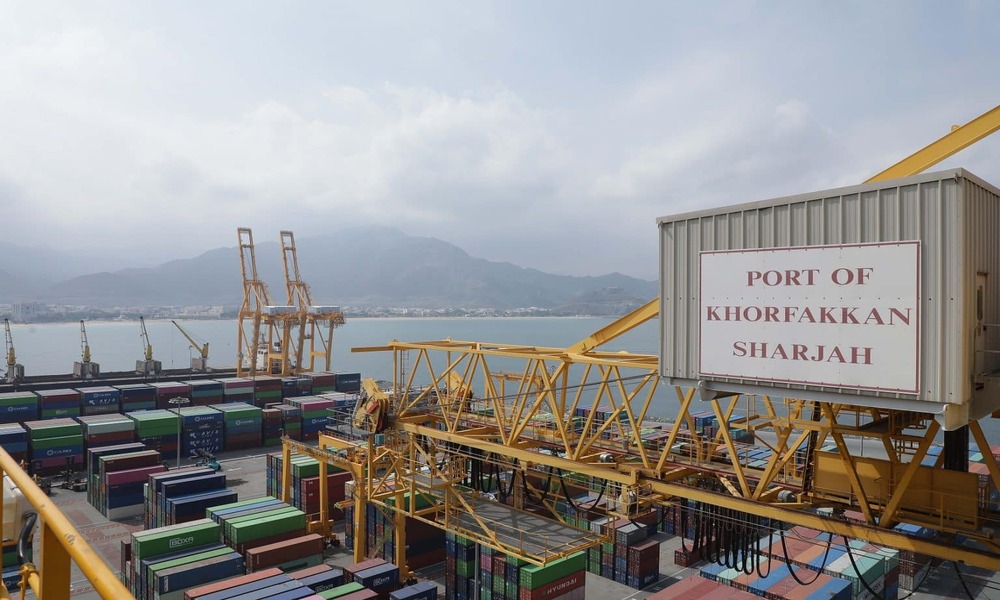
Gulftainer highlighted that the project will make use of existing infrastructure, including the Khorfakkan Commercial Terminal and Sajaa Dry Port, as well as inland transport corridors. These components will work together to create a seamless logistics chain linking the UAE directly to Dammam, one of Saudi Arabia’s key commercial hubs.
By combining inland transport with land-sea connectivity, the trade bridge offers a more efficient and dependable route for cargo movement. It also strengthens the region’s logistics infrastructure, making it better equipped to handle growing trade volumes and increasing demand for reliable transport solutions.
The announcement reflects wider efforts across the Gulf to enhance trade connectivity and build more resilient supply chains. Recent initiatives, such as new customs cooperation agreements, underline a shared commitment among regional economies to facilitate smoother commerce and support long-term economic growth.

