

Question: ZF Aftermarket is undergoing a major transformation. How would you define ZF’s vision for the next stage of the global aftermarket?
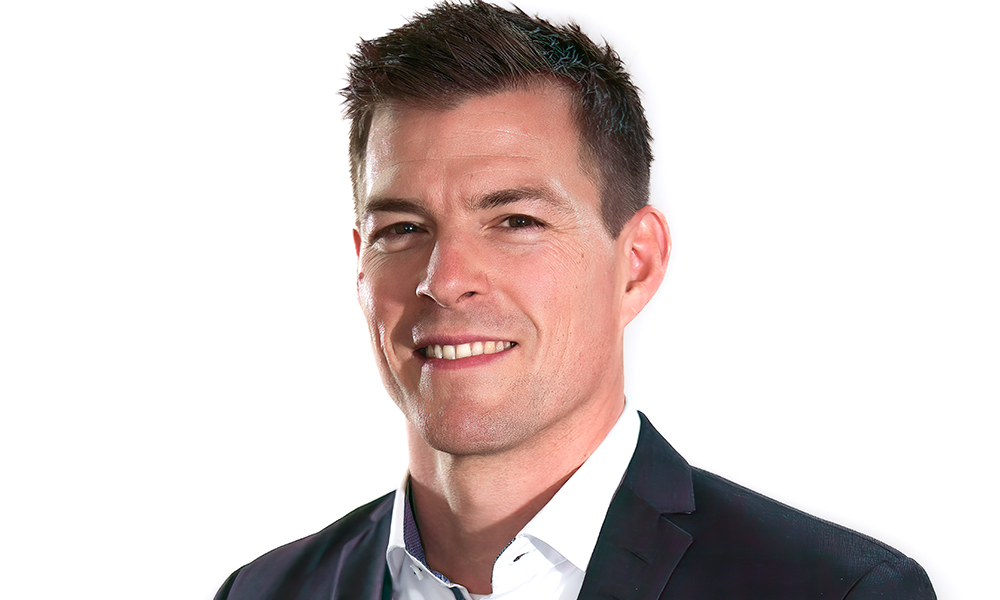
Andre Scholle: The global aftermarket industry is undergoing significant transformation. With more than 100 years of experience and a strong leadership position, it can be assumed ZF could simply adapt as the market evolves — but our ambition is greater than that. We believe ZF should actively shape this transformation.
Through the products, services, and solutions we deliver, our goal is to influence the future direction of the aftermarket, not just participate in it.
Q: Why is Uptime becoming such a dominant theme for the industry, and why now?
AS: It is becoming increasingly important and now encompasses a much wider range of aspects. When I started in the industry about 20 years ago, the key factors were availability, pricing, and product range. These prerequisites still matter, of course, but expectations have expanded significantly — and Uptime is essentially what captures these new requirements.
The customer landscape has also evolved. We are no longer speaking only about distributors. The range of stakeholders is widening, and we now talk about fleets and their challenges as well as end‑users’. It has become a complete ecosystem that we need to consider.
Q: How does ZF define “Mobility Uptime” and what does it look like across commercial vehicles, passenger cars, and off-highway machines?
AS: Mobility Uptime is not merely a phrase — it’s an operational philosophy. I would define it as a holistic concept that brings together all the requirements necessary to keep vehicles running efficiently across every segment. At ZF, our goal is to deliver the same level of excellence across all fields — whether commercial vehicles, off‑highway equipment, or passenger cars. We are committed to meeting the diverse needs of each vehicle category and setting the benchmark for performance and reliability, which is something I find particularly compelling.
Q: Avoiding downtime is key in the modern world of mobility. What are the biggest drivers of downtime today — and how can ZF realistically solve them?
AS: First of all, we can support customers by resolving issues that arise in their fleets to minimise downtime when failures occur. However, our greater impact lies in preventing vehicle downtime before it happens. This is achieved through structured preventive maintenance and a suite of manual and digital tools designed to identify risks early and stabilise fleet performance. These two pillars — reactive problem‑solving and proactive prevention — are the core drivers of uptime improvement.
Predictive diagnostics and connected systems are central to ZF’s current development roadmap. These technologies complement our broader service and solution portfolio by enabling real‑time condition monitoring, data‑driven maintenance planning, and earlier detection of performance deviations, all of which significantly reduce the likelihood of unplanned downtime.
At present, much of the business activity in my region is still linked to traditional “iron and steel” components. While this remains an important foundation, the next wave of development extends far beyond hardware. We recognise that future value will increasingly come from areas where we historically have less experience — such as digital enablement, connectivity, and service‑driven technologies. This shift requires focused investment and organizational learning, and although we are in a transition phase, I believe we are progressing in the right direction.
Q: The market in this region has traditionally been a reactive one in terms of maintenance, particularly repair. How do you think a company like ZF can help make a faster shift to the sorts of technologies that you’re talking about?
AS: If you look at the Middle East — and even more so at India — these markets are rapidly becoming masters of their own development. Our presence in these regions and the continuous expansion of our local footprint enable us to support customers more closely and help them actively participate in this growth. This proximity to fast‑evolving markets is a key area where ZF can create significant value.
However, operating in these regions is not always simple, particularly for a company rooted in a traditionally German mindset and organizational structure. This is precisely why we place such strong emphasis on empowering our local teams to lead the business. I firmly believe that you cannot win a development race in the Middle East with a purely German mindset. ZF will always retain its German heritage, of course, but the real acceleration in markets like India, Turkey, or the GCC must be driven by local expertise. Strengthening and enabling these local competencies is therefore a critical part of our strategy.
Q: What makes the IMEA (India, Middle East & Africa) region so important for ZF Aftermarket?
AS: It is extremely important because today it represents our second‑largest region in terms of revenue. Europe is still ahead, of course, but my ambition is to develop IMEA into our number‑one region. When you look at the potential and the compound annual growth rates across IMEA, every single country is outperforming Europe. Naturally, our strategic planning and business expansion efforts are aligned with this upward trajectory.
Q: Where does Dubai fit into your global footprint?
AS: Dubai serves as one of the key centers of gravity for our region. Geographically, it sits at the heart of the IMEA landscape, but more importantly, it functions as an economic hub with exceptional distribution capability and business reach. Its role as a logistics and commercial gateway significantly accelerates regional business development.
It is also an outstanding environment for conducting business, and one where ZF has built a strong and longstanding presence. Our various brands have been active in Dubai for decades, and now, bringing them together under one roof enhances our ability to serve the market even more effectively. This legacy — combined with Dubai’s strategic position — makes it naturally one of the primary centers of gravity for our regional operations.
Q: What are the regional sectors that are growing fastest: fleets, logistics, off-highway, marine?
AS: There are certain sequences and synergies to consider. A significant opportunity for us exists particularly within the passenger car segment. While ZF has a strong reputation for products associated with German or broader European vehicles, it is important to recognise that regional development in the car parts sector is highly diverse and often not focused on Europe. We must adapt our perspective beyond a primarily European approach to successfully expand our offerings in non-European markets. Capitalising on this shift will be essential for our continued growth.
Additionally, there are sectors where our involvement has been limited thus far, notably in industrial areas. For instance, the African continent presents untapped potential, especially in the off-highway and marine aftermarket sectors. These represent promising opportunities that we have yet to fully explore.
In summary, focusing on these areas will allow us to achieve quick wins and drive future success.
Q: How is ZF supporting Gulf fleets facing rising cost pressures and longer machine cycles?
AS: One advantage of our connections with fleets is that we don’t need to start from the beginning. Thanks to our strong focus on service, we’ve already established solid relationships with many major fleets. The fleet industry itself is evolving—not just buses now, but passenger car fleets will also play a role in the future.
We already have valuable expertise in working with fleets and supporting them in boosting their Uptime. There’s an opportunity to build on this experience, especially as fleet requirements become more complex. Meeting these new, more challenging needs will be our next important step.
Q: Can you share examples of recent partnerships that illustrate this direction?
AS: For example, our largest bus fleet in Turkey has experienced significant growth, and our Bus Connect programs have been well received by fleet customers.
In the Middle East, we’ve achieved major business wins with public transport operators due to our new offerings.
Q: How do you work with distributors and workshop networks to improve customer uptime?
AS: Of course, we value our distributor partners through whom we are very well presented across the region. But our business isn’t a traditional buy‑and‑sell model. The workshops are a strategic lever, shaping product demand and strengthening the pull from the market. We focus on enabling them to drive value. By empowering them, we generate stronger demand and create additional business for our distributor partners. It’s a balanced push‑and‑pull approach—and the workshops are central to its success.
Q: What role does remanufacturing play in uptime and cost reduction?
AS: We currently carry out some limited remanufacturing work at our Turkish facility, but we aim to broaden this scope. In my opinion, there’s no reason to restrict ourselves to remanufacturing; we should also consider manufacturing. Given the region’s capabilities and our established presence, it’s worth exploring the potential for manufacturing here. Beyond just repair or remanufacture, we could assemble and create products that are specifically suited to our regional needs.
Q: So what could be some potential manufacturing bases for ZF in the wider IMEA region – perhaps Saudi Arabia or India?
AS: We already have shock absorber assembly in India and are considering braking components there too. Turkey is also an option, and we’re certainly not ruling out Saudi Arabia. Legal and bureaucratic factors are important to consider for each market. Africa is also worth considering as it offers opportunities for both manufacturing and remanufacturing. Let’s dream big.
Q: How is ZF educating the market about reman vs new? And how do you perceive the market’s views on this matter?
AS: At a recent customer event, we engaged in a productive discussion regarding remanufacturing and its associated sustainability benefits. Many of our customers expressed support for sustainable business development. However, when asked if they would be willing to pay a 10% premium for a sustainable brake pad, you could see hesitation, particularly due to the additional costs associated with remanufacturing processes.
Ultimately, while financial objectives remain central to our operations, it is essential to strike a balance between pursuing sustainability and achieving turnover goals, especially within this region. Increasing awareness about sustainability among our stakeholders remains a complex task, yet we are observing increased receptiveness among customers.
The complexity in the diversity of our product range presents challenges for training and awareness. Although not all ZF employees possess technical expertise, it is imperative that we invest in training both our customers and our employees on the importance and the difference of sustainability vs new. This enables them to further train others throughout the value chain. Customer education forms a key component of our future strategy, alongside maintaining close customer relationships. Without this proximity to our customers, effective education and training cannot occur. We view customer training as a strategic pre-investment critical to our ongoing success.
Q: How important are events such as Automechanika Dubai in terms of getting close to customers?
AS: The show in Dubai has grown into a major regional and global event, attracting participants from around the world. It’s a valuable networking opportunity where we connected with existing customers and made new contacts. We also used the event to highlight the significance of this region, particularly Dubai, for our business.
Q: From a market perspective, surely ZF would have to go to the customers now, as it’s increasingly becoming such a competitive marketplace?
AS: Many people still choose ZF because of its long-standing reputation—over a century old! Yet, the competition is performing well too.
We can’t remain just a distributor; we must actively shape change in the aftermarket. This involves and adopting a proactive approach to sales, rather than a reactive one. It requires a shift in mindset among employees, many of whom have been at ZF for decades or even generations. Although this transformation can be challenging, it is essential and has already begun, sometimes requiring us to shake things up.
My goal isn’t just to preserve ZF’s legacy for another 10 or 20 years until retirement, but to help drive ongoing transformation, ensuring future generations at ZF can succeed and influence market evolution. It’s important to adopt new perspectives. While European leadership in the aftermarket isn’t finished, Europe is no longer the sole player. That’s why we need a change in perception, and working internationally offers the ideal environment for this. I’m genuinely excited to contribute.

