


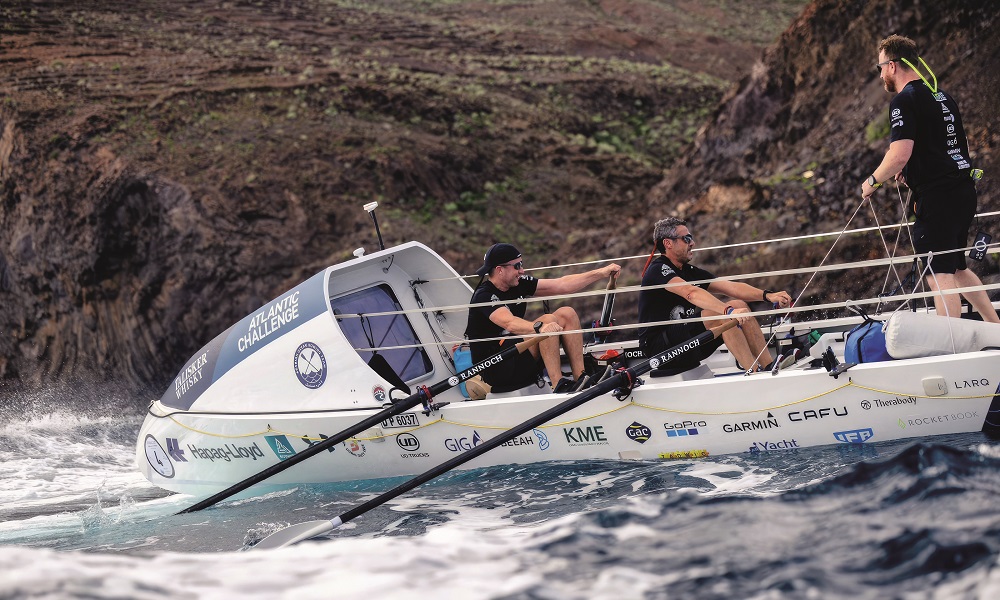
T&FME was invited to a very special talk with adventurer Toby Gregory of the Arabian Ocean Rowing Team last month, a man who, with two crewmates, has completed an arduous crossing from North Africa to the Caribbean.
Alongside him were the team from UD Trucks who had supported him on his epic journey and had seen in Gregory a shared appreciation of the power of resilience, collaboration and sustainability.
“What were you doing on the 1st of January last year? Were you at home? Were you out? Not sure. Okay. Well, I’ll never forget it because I was about 940 miles off the coast of West Africa. We had just been through at that point, a five day storm where waves were up to 40 feet high. The wind was up to 30 knots and there were a number of other ocean rowing boats out at the same time. And four of those had capsized. And it was in the middle of a search and rescue operation to save them. And to me, I had a huge decision to make,” he begins, gesturing to Invictus the craft that had taken them across the Atlantic.
“I’ve got somebody asleep in front of me, I’ve got another person asleep in this cabin here (he points to small hatch at the bow of the boat). The waves have abated slightly for a period of about 12 hours. From our onshore crew, some people were saying, go south, some people were saying start to go towards the Caribbean – because we knew there was another storm on its way. So, where do we go and what do we do? There was a huge amount of pressure and I had probably had maybe four hours sleep over the last four days. I was so, so tired.”
At that point most people may have considered also turning back to shore and to safety. Gregory had been dreaming about the attempt for over a decade. He had given up a role as an advisor to the leadership of Dubai to channel his efforts into the attempt. You can only imagine the turmoil he must have felt internally and as the waves thumped on the sturdy but diminutive boat.
“And I’ll never forget after this, it was first in the morning, I called and spoke to my parents…” he says. “I might have been in the middle of the ocean, but everyone else was about doing their chores, they’re going shopping, they’re just living life and you’ve got to also fit into that, so they don’t worry about you.”
A call from Gregory on that day was unlikely to be out of the ordinary.
“I made sure I called home virtually every day, my grandma, my siblings, parents… everybody. And I was talking to my dad. I was like, I’m not going to go south and I’m not going to head towards the Caribbean either. We’re going to go with the storm and we’re going to go where the wind blows,” he pauses a moment and brings out a map, showing his option on that morning. Hundreds of miles from help, a decision had to be made.
“And prior to this, I perhaps wouldn’t have an answer of what to do. But by following some of the wind and not going against it, it had guided us to where we were. And at that time we were towards the back of the fleet. We weren’t racing, we were in our own world, but that single decision took us from the back of a group of boats that we couldn’t see – but we knew were out there somewhere – to third place. Overall, it was a move that overtook everybody when other boats fell apart.”
He produces a picture taken from the boat. On the horizon you can see the gloom at the edge of the storm cloud. The next four days the crew were caught in the storm, with their small craft riding the waves like a giant rollercoaster ride.
“It really it doesn’t look like much,” he says showing a picture of the tempest surrounding the boat while the crew agonised on what they should do.
“And I truly believe, and certainly in this circumstance, sometimes, the pressure and everything is sent not to expose your weaknesses, it’s about a chance for you to think clearly and show your strengths. For me, that is a huge moment in time and just a huge learning that I’ll carry with me.”
Gregory recalls his time as working for the leadership of Dubai and the UAE (“the voyage was quite adifference from where I’d been before because in the past I’d had a regular job just like anyone else”).
“For about 13 years, I had worked across everything from humanitarian programmes to financial, to crisis communications. So, to suddenly be on a rowing boat was quite… different.”
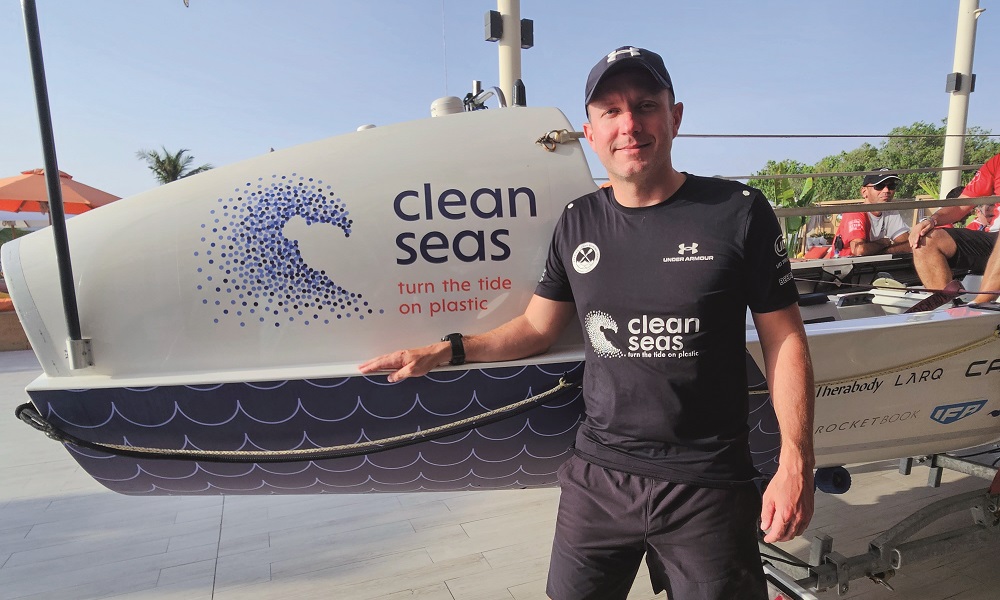
The initial urge to push himself and attempt the extraordinary had come during a visit to the London Boat Show. Most people were there to see the big yachts and to dream of sunbaked excursions to warmer climes others to finally buy their dream.
“It all started without me even realising back in 2008 and a chance meeting at the Boat Show when I stumbled across an object. And I was just very curious when I saw this object…”
He ended up talking to the owner of the oddly shaped boat and learned that it was going to be sailed across the Atlantic Ocean.
“I just didn’t think it was humanly possible,” he exclaims. “And it was this tiny little thing. Why would somebody do a challenge like this, but also how on earth can be done? And from the conversation (with the boat’s owner), there was a recommendation to read a book called The Penant Way (“which actually, frankly has an awful lot to answer to”). I read the book, and without even knowing, it began a journey that coincided with my passion for water and ultra endurance which has led me to where I am today.”
But then there was still the day job, including, by 2012, helping Dubai with its bidding for World Expo. All the while, the thought of making an epic crossing was beginning to take hold – especially as he was now pushing the limits of endurance racing. Albeit on dry land:
“I’d been consuming these ocean rowing and adventure books, but I was also participating in things like a seven day run across the Moroccan desert where you carry everything you can on your own back… They give you water, but you are literally doing a marathon a day for roughly six or seven days, including one day where it’s back to back. So, for me, that was 90km in one day.”
Back at the day job, his gathering obsession about an ocean crossing hadn’t gone unnoticed.
“A project came up, and they said, you know all about the ocean, this is yours. I said, look, frankly, I’ve been reading these books, but it’s a big difference between reading books and learning about these sorts of things and taking on a project like this, but I’ll give it a go. It was around that time that somebody said to me, well what would your rowing boat look like if you were to do it? So, I started to sketch it out.”
Taking another glance at Invictus, he adds: “It doesn’t look too dissimilar to what I ended up with.”
Returning to his audience: “It all kind of collided. The books I had been reading, the stuff I had been doing today, like the Marathon endurance running. Everything came together in this perfect storm. And my thought was, if I was going to do it and this person asked me questions, what would my audacious dream look like?”
That dream, he says would be to raise awareness about the environment: “But I was still really worried, very concerned, because to that point, more people had been into space, than had ever rowed across an ocean. Even today, more people have been up Everest in a single season than have ever rode across an ocean.”
From that point he was taking small steps forward, sketching out what the boat would look like: how you would plan your attempt, including what you would need to take.
“Somebody reminded me of something that I had on my, my desk, a small quote that I had taken from one of the books I was reading. And it said, you can never cross an ocean unless you have the courage to lose sight in the shore.
“I began the quest to start to row across the ocean.”
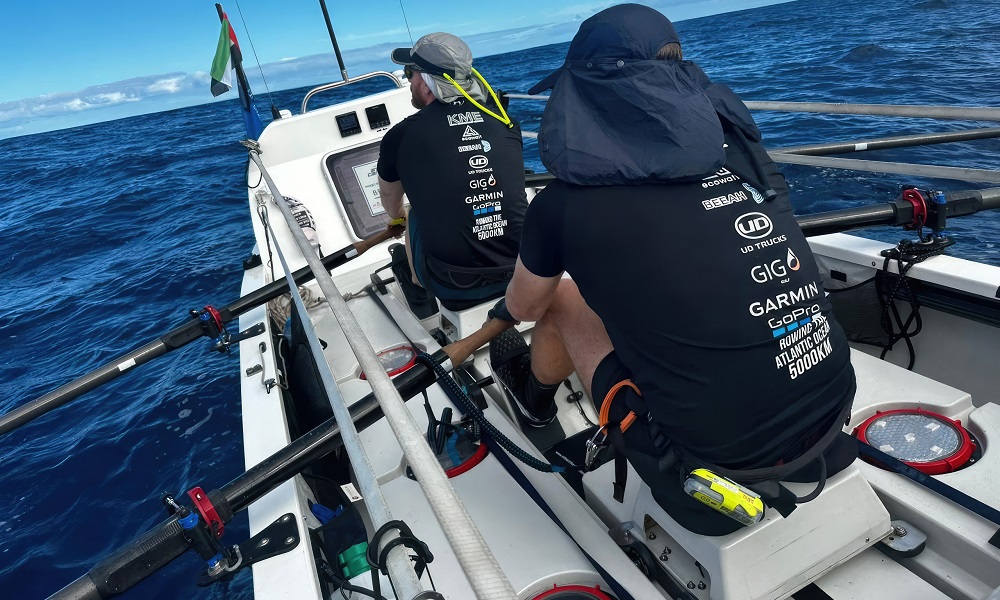 The journey itself was going to be over 5,000 kilometers from the coast of Africa, “roughly all the way across to the Caribbean…the widest part. If we were going do it, we were going to do it properly. We knew that our schedule would be roughly two hours rowing, one to two hours resting. And you’d need to do that all day and all night.
Gregory and his crewmates also agreed to test themselves to the limits by making the attempt fully unsupported and unassisted, “which basically means from the moment you set off to the moment you step off the boat on the other side., you are completely on your own that there’s nobody gonna be there to help you. You carry all your own food, your supplies, and you need to know everything about a boat. You need to know all the electronics, the medical first aid, everything.”
He draws a comparison with his hosts and sponsors, UD Trucks.
“There are so many things that we’ve put in place and so many things that’s similar to UD Trucks’ gemba spirit (UD desribes gemba as the professional, passionate and dependable spirit of the UD people. And the the will to roll up sleeves and provide a solution). I know it’s not necessarily for everyone to cross an ocean, but it all comes down to self-discipline.
“I know a lot of people think, oh, you enjoy going to the gym, you enjoy training 24/7. They think, as I enjoy all these things, I must be very good at it. That couldn’t be further from the truth. I procrastinate. I search social media. I don’t necessarily enjoy getting up at five o’clock in the morning, but ultimately, self-discipline is the single difference between success and failure. Use self-discipline to make a plan, put it in place and deliver. With that you’ll accomplish your goal.”’
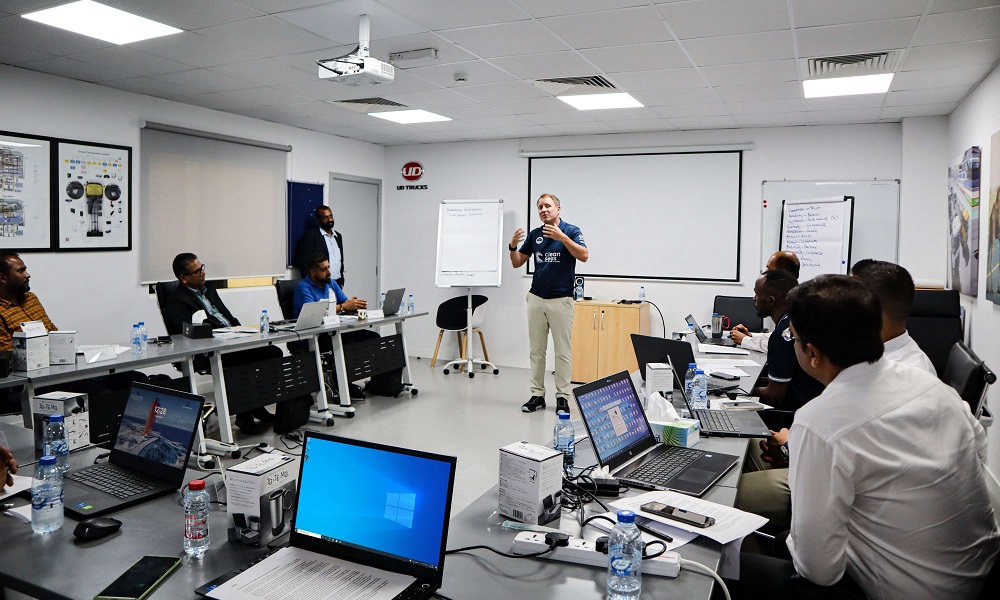
In addition to UD Trucks, Gregory was also keen to involve the UN. He assumed that his desire to use the voyage to do research on plastic waste in the ocean would be well received.
“I wanted to raise awareness about the environment, so I spoke to the UN and they were incredibly excited about the project. They couldn’t have been happier. They said, this is absolutely fantastic….they proceeded to refuse to answer any more of my calls. Absolute radio silence.”
Fortunately, his persistence was to eventually pay-off: “I didn’t stop. I said, look, I’m genuinely going to do this and I genuinely think I can deliver. And eventually after a period of six months of conversations, negotiations, we partnered with the UN Environment program and specifically their Clean Seas project.”
It was a cause close to his heart: “Roughly 60 to 90% of the pollution that’s on our shore ends up in the sea and is made up of plastics and it’s all completely avoidable.”
A conscientious procrastinator he may be, but Gregory is clearly also a well-versed packer. From inside a modest case, he produces a survival kit of technology, that could save the crew in a moment of crisis, including a harness that was worn throughout and an EPIRB, a buoyant GPS Personal Locator Beacon, should any of them go overboard.
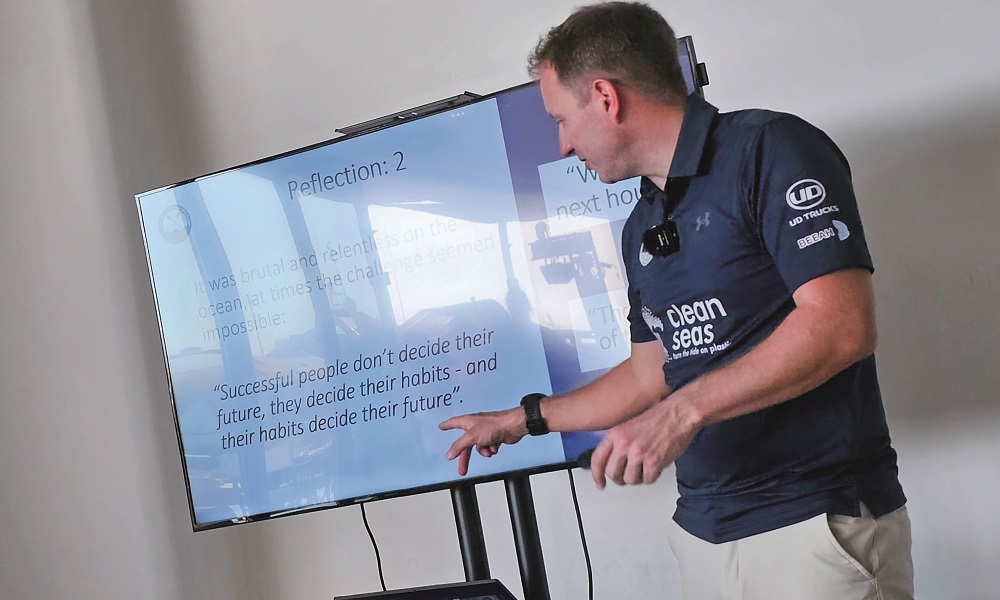
He also demonstrates an inflatable survival suit that wouldn’t look out place in a James Bond villain’s nuclear lair: “It’s not the best design,” he jokes about the look of the big and awkward cover-all. Cumbersome on dry land, you wonder what it would be like to suit up in the middle of an Atlantic hurricane. “We had to do (a lot of) drills where we would get fully suited up within the cabins.”
Being powered solely by nothing other than their own effort, packing the boat was a challenged that consumed Gregory constantly. With food stuffed (thousand of calories were needed every day) in special storage compartments, and room on the deck taken up by redundancies for the oars, the boat left Morocco with barely an inch of room wasted: “It literally had to carry absolutely everything. When we set off, the boat was over two tons in weight.”
When the storm hit them, they were still bearing much of that load. “On about the 22nd of December, somebody sitting in Dubai Marina, who was monitoring the wave and weather patterns for us, turned around to me and said, Tobes just so you know, the wave height tomorrow and for the next four days is going to be elevated. I was like, what does elevated mean?”
Having decided to head into the storm and avoid routes other boats had taken, the crew ventured into the turmoil.
“The wave height was 12 to 14 meters. We were wearing the harnesses, we had the right safety equipment, but it doesn’t stop you from being scared. You need to focus on is what you are going to achieve for that next hour. You know, what do you have to deliver on? What do you have to succeed at? And that’s what we did.”
Fortunately, a weather expert was to help guide the crew from the worst of the weather. Once again, he shows the map of the Atlantic. A curving route is marked on it.
“We found this beautiful blue line that was slowly making its way north. And they said to us, if you can get to there, you’ll be safe. So we set off and we rowed and we rowed and we rowed. At one point we were closer to the west coast of Africa than we were from where we set off. And again, everyone’s like, well they’re new to this. They don’t know what they’re doing, what a disaster. But it wasn’t (to us), it was all planned. We knew exactly what we were doing. The weather abated.”
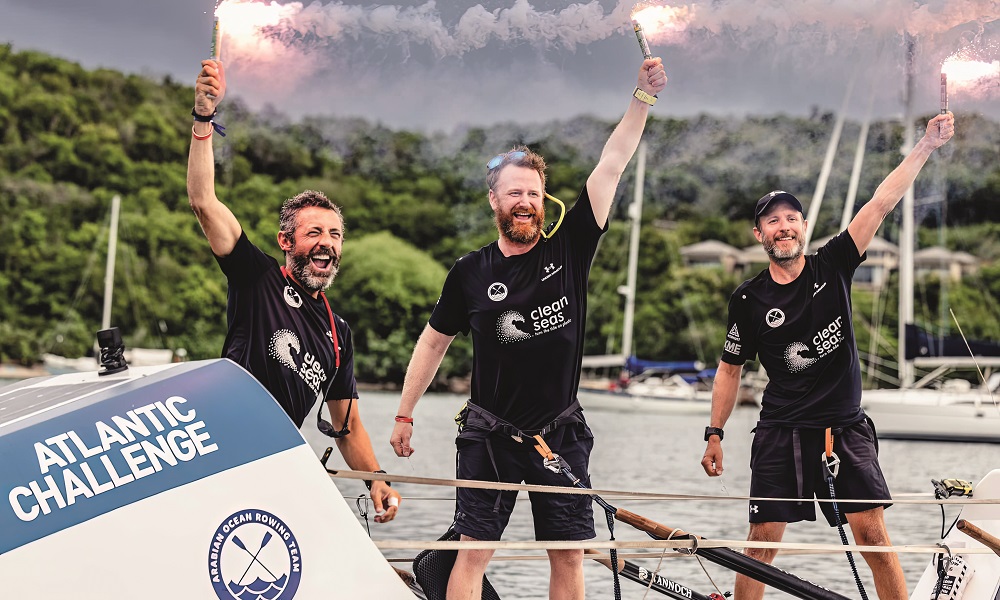
Despite the toil, the trek wasn’t without moments of genuine awe for the crew as it headed on towards the Americas. They would see the shadows of whales through the waves and dolphins tracking Invictus in the water as it was lit by uninterrupted sunrises.
“It was also mesmerising with the stars at night. We saw meteorites, we saw comets, shooting stars. There is no light pollution, just the whole of the galaxy lit up, all for you.”

