


The UAE is intensifying efforts to safeguard regional trade and strengthen supply chain resilience, as government and industry leaders align on measures to address ongoing logistical challenges.
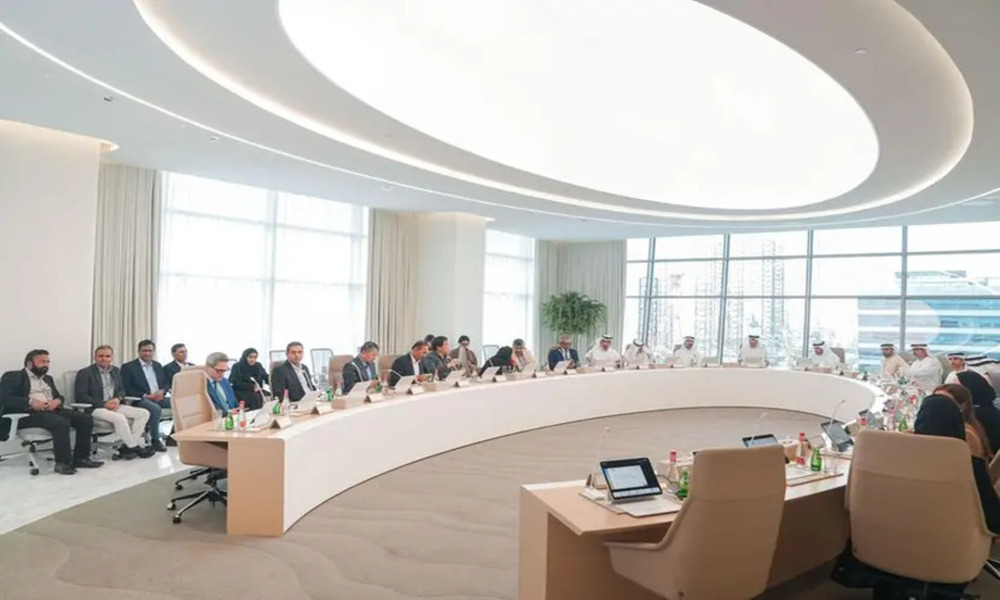
Dr Thani bin Ahmed Al Zeyoudi, Minister of Foreign Trade, chaired a high-level coordination meeting at the Ports, Customs and Free Zone Corporation (PCFC) headquarters in Dubai. The session brought together senior executives from global shipping lines and maritime associations to assess disruptions and identify solutions to maintain trade continuity.
Attendees included Abdulla bin Damithan, Chairman of PCFC, and Dr Abdulla Busenad, Director General of Dubai Customs, alongside senior figures from the logistics and maritime sectors.
Dr Al Zeyoudi reaffirmed the UAE’s commitment to ensuring the uninterrupted flow of goods through closer collaboration and adaptive policies. He highlighted the importance of sustained coordination to enhance supply chain efficiency, agility and responsiveness, particularly for essential and strategic commodities.
He said: “The UAE will continue to play a pivotal role in supporting regional and international trade stability through targeted initiatives and adaptive policies that enhance supply chain performance and sustainability. The UAE stands ready to deepen its engagement with regional and international partners to build a more connected, resilient, and future-ready trade ecosystem.”
Efforts are focused on strengthening alternative trade corridors and advancing customs and operational frameworks to reinforce the UAE’s competitiveness as a global logistics hub.
Bin Damithan pointed to progress made since the previous meeting, particularly in addressing regional challenges and maintaining trade flows. He highlighted closer cooperation between public and private stakeholders and improvements in alternative routes, including Fujairah and Khorfakkan ports, as well as enhanced regional maritime connectivity.
He stressed that continued coordination remains essential amid rising costs and operational complexity, while noting the importance of building on recent initiatives to deliver practical, long-term solutions. Ensuring the steady movement of essential goods, he added, remains a core priority.
Dr Busenad outlined key customs measures introduced to facilitate cargo movement and improve efficiency. These include initiatives to streamline procedures and support smoother trade flows across borders.
He stated: “Over the past period, we have successfully implemented a number of high-impact initiatives that facilitated cargo movement and enhanced supply chain efficiency. These include the issuance of Customs Notice No. (6), enabling transit cargo movement through the green corridor with the Sultanate of Oman, the acceptance of undertaking letters as valid guarantees, and the organisation of workshops with traders to explain green corridor mechanisms and address their enquiries.”
He added: “We are currently rolling out several pilot projects, including the activation of the Advance Cargo Information (ACI) system through shipping companies for all green corridor cargo, as well as the launch of a new maritime feeder service linking the region with India, further strengthening trade connectivity.”
Further initiatives include extending grace periods for re-export cargo, expanding secured land transport corridors, broadening the green corridor to Saudi Arabia, and offering more flexible clearance options.
The meeting also reviewed developments since the previous session, including improved handling of critical shipments, activation of alternative corridors, and wider use of multimodal transport such as land and rail. These measures are aimed at addressing capacity constraints and rising costs while ensuring long-term supply chain resilience.

