


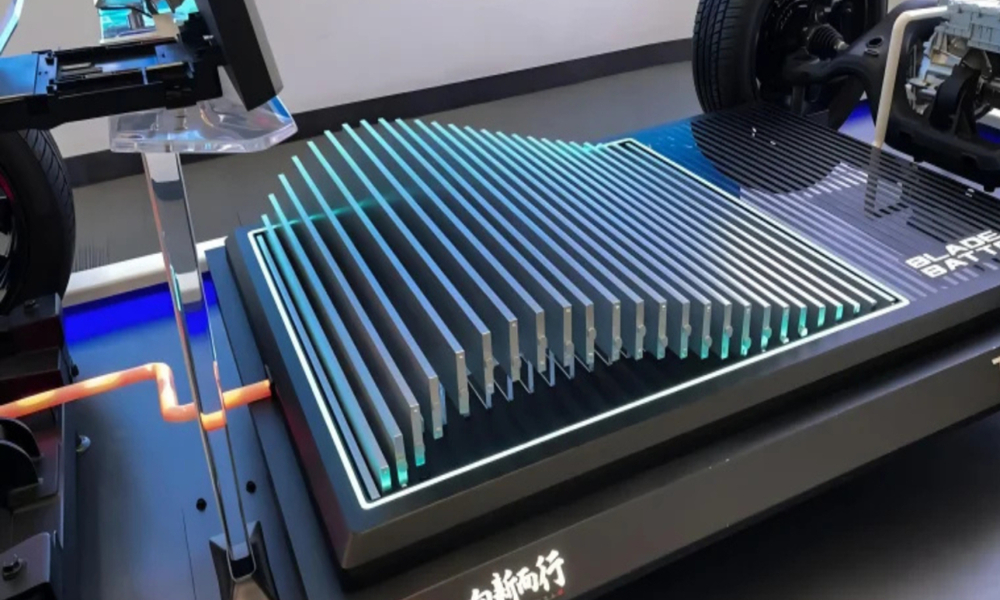
Chinese electric vehicle manufacturer BYD has revealed a major upgrade to its flagship Blade battery, marking the first substantial overhaul of the technology in six years.
BYD said that it is betting that faster charging capabilities and longer driving distances will help it regain momentum in China’s fiercely competitive EV sector.
The second-generation Blade battery was introduced during a live-streamed launch event in Shenzhen, where BYD chairman Wang Chuanfu detailed the improvements. He stated that the updated battery can charge from 20% to 97% in under 12 minutes, even in freezing conditions as low as minus 20°C. The new system also delivers a maximum driving range of up to 777 kilometres on a single charge, representing a notable leap forward in performance.
Wang added that the higher energy density of the upgraded battery could unlock even greater capabilities for premium models. Upcoming vehicles from BYD’s luxury divisions, including Denza and Yangwang, may achieve ranges exceeding 1,000 km. One such model, the Yangwang U7, is expected to showcase these advancements. He also stressed that the battery has passed rigorous safety testing, surpassing the latest national standards in China.
Alongside the battery announcement, BYD outlined ambitious plans to expand its fast-charging network. The company aims to grow its “Flash Charging” infrastructure to approximately 20,000 stations by the end of 2026, including around 2,000 located along major highways. As of early March, more than 4,000 stations had already been completed.
During the three-hour presentation, BYD unveiled over ten new vehicle models equipped with the updated battery technology. These ranged from more affordable options such as the Song Ultra EV, priced at $22,508, to high-end offerings like the Yangwang U8L, which carries a price tag of $188,777.
Despite the technological progress, analysts remain cautious about BYD’s near-term prospects. The company, long recognised as China’s top EV seller, was recently overtaken by rival Geely in early 2026 sales. Some experts suggest that while the new battery represents a meaningful innovation, it may not immediately restore BYD’s market dominance.
The announcement comes amid broader industry shifts, as Chinese regulators encourage automakers to move beyond aggressive price competition and focus instead on quality and differentiation. BYD has already responded by introducing longer-range hybrid models and new financing options to stay competitive against rivals such as Tesla.

