


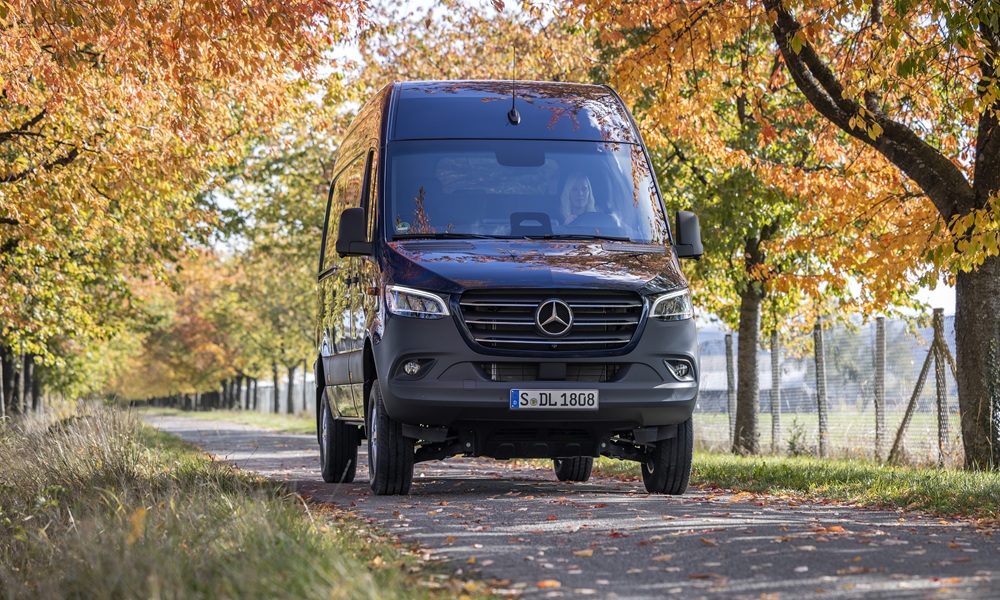
Mercedes-Benz Vans has unveiled its bold engineering and artistic vision for its next-generation Sprinter as it prepares to celebrate nearly 130 years of van-making history.
Ahead of its “130 Years of Transportation” anniversary in 2026, the brand presented THE BOuLDER — an expressive, stone-like sculpture that hints at the future design direction of the iconic Sprinter at a global media gathering.
The journalists were also gifted an early look at a full scale model of its Vito-like range cousin, ahead of an official unveiling next year.

The 6.5-metre-long, 2.75-metre-high THE BOuLDER artwork combines art, craftsmanship and technology to convey Mercedes-Benz’s continuing commitment to robustness, reliability, versatility and durability. Carved from a single block of material, THE BOuLDER symbolises both the permanence and transformation of the brand’s light commercial vehicle philosophy.
“As the inventor of the light commercial vehicle, we’ve been consistently putting all our expertise and experience at the service of our commercial customers for almost 130 years,” said Thomas Klein, Head of Mercedes-Benz Vans. “Their benefits and added value are our top priority – then, now and in the future. Customer satisfaction and innovative solutions are deeply rooted in our corporate DNA and form the foundation of our premium vans.”
Mercedes-Benz says the next generation of its globally recognised van will set new standards for efficiency, intelligence and digitalisation. The vehicle’s exterior, previewed through THE BOuLDER, will be designed around the diverse needs of commercial customers, with multiple lengths, wheelbases and configurations to support industries from construction to logistics and emergency services.
“The next generation of Mercedes-Benz vans will focus on innovative powertrains, connectivity and advanced digital services,” said Andreas Zygan, Head of Development at Mercedes-Benz Vans. “Functionality and customer needs are at the heart of our development. We’ve tailored our Mercedes-Benz Operating System specifically to commercial use and with it, will redefine the van segment once again. I’m confident that our future Sprinter will be the flagship in its segment more than ever before.”
MB.OS: A Digital Leap for Commercial Mobility
At the heart of the next Sprinter is MB.OS, the Mercedes-Benz Operating System, a proprietary digital architecture designed to deliver continuous updates and deep connectivity. Built around a chip-to-cloud framework, MB.OS links all onboard sensors and actuators, enabling functions ranging from infotainment and safety to energy management.
Thanks to its AI-supported systems, every van will feature high-performance computers connected to the Mercedes-Benz Intelligent Cloud, supporting over-the-air software updates for years after purchase.
Mercedes-Benz says the approach will allow operators to “future-proof” their fleets, ensuring new features, safety improvements and apps can be installed remotely. Commercial customers will also be able to integrate their own fleet management, navigation or delivery software directly into the vehicle interface while retaining the familiar Mercedes-Benz user experience.
The upcoming Van Electric Architecture (VAN.EA) and Van Combustion Architecture (VAN.CA) will serve as the foundation for all new medium and large Mercedes-Benz vans. The company plans to introduce the fully electric VLE (Van Large Electric) model in 2026 for private users, followed by electric transporters for commercial applications.
Meanwhile, the VAN.CA platform will ensure the continued availability of advanced combustion engine vans, offering customers a choice of efficient powertrains depending on regional market needs.
Developed in collaboration with customers from multiple sectors, the new generation will include a wide variety of body configurations – from courier and refrigerated transport to ambulances, service vans and passenger carriers.
In a nod to its origins, Mercedes-Benz has also presented the world’s oldest roadworthy delivery van, a meticulously restored 1899 Benz combination delivery vehicle. Originally built under licence by Hewetson’s Ltd. in England and known as the “Ideal Van”, it featured a 3hp engine capable of carrying 100 kilograms of goods plus the driver.
This model followed the trail blazed by Carl Benz’s 1896 design for Du Bon Marché in Paris – widely regarded as the world’s first motorised delivery van. The original Benz vehicles could carry three times the payload of a horse-drawn cart and reach speeds of up to 20 km/h, setting the foundation for a new era of commercial transport.
A century after Carl Benz’s first transporter, Mercedes-Benz revolutionised the light commercial vehicle market again in 1995 with the launch of the Sprinter. The model bridged the gap between cars and trucks, becoming a global benchmark for performance, safety and comfort.
Over three decades, more than five million Sprinters have been produced across numerous configurations. The van has earned a 77% repurchase rate in Europe – a figure Mercedes-Benz says reflects its unparalleled customer loyalty.
From ambulances and delivery vans to motorhomes and VIP shuttles, the Sprinter’s adaptability has made it indispensable to countless industries. “Our future Sprinter will build on this legacy,” Zygan said. “It will be even more digital, more efficient and more tailored to every type of business.”
View this post on Instagram
Mercedes-Benz says the upcoming Sprinter and its siblings will continue the brand’s tradition of “rock-solid dependability” while embracing new levels of digital intelligence. Through MB.OS, AI-driven data analytics, and enhanced connectivity, the vans will deliver predictive maintenance, smarter navigation and simplified fleet operations.
Each new van, Mercedes-Benz claims, will stay “up to date for years to come”, with new features and third-party integrations available long after production – much like a smartphone that continues to evolve.
From Carl Benz’s first delivery van to the digital-era Sprinter, Mercedes-Benz Vans continues to set benchmarks for versatility and customer focus. The unveiling of THE BOuLDER in Stuttgart captures that spirit: a physical embodiment of how tradition and technology can coexist within the same brand.
As Mercedes-Benz prepares to enter its 130th year of commercial vehicle production, it does so with one foot in its past and both eyes on the future: where connectivity, electrification and design converge to define what it means to be a van in the modern world.

