



Since 2020, global supply chains have been faced with exceptional political, social and economic circumstances due to the pandemic, the semiconductor shortage and the Russia-Ukraine war. Lamborghini’s resilience ensured that the company remained extremely solid as it not only took on these challenges but also achieved record-breaking results on the sales and financial fronts. What strategy did Lamborghini adopt to ensure that production could continue uninterrupted? What approach is it taking as it prepares for the future?
These were the topics discussed with Silvano Michieli, the chief procurement officer at Automobili Lamborghini, along with the exemplary cooperation with the Ukrainian supplier Leoni.
How is Lamborghini reacting to the supply chain challenges presented by the current geopolitical situation?
First Covid, then the issue with semiconductors, not to mention the conflict in Ukraine and protectionist policies: against this backdrop, Lamborghini has been taking risk limitation measures and securing its supply chain. One of the main initiatives that we’ve taken here has been to forge even closer ties with some of our strategic suppliers, going from a more traditional supplier/client relationship to one that’s more of a partnership. At the same time, we revise our processes to a more proactive, analytical approach. This will enable us to anticipate any new problems in the industry.
Referring specifically to the war in Ukraine, Lamborghini is in close contact with its suppliers in the country thanks to an emergency task force established by the Volkswagen Group that is responsible for ensuring that a steady flow of supplies continues to arrive. One of the stories that has emerged concerns is the cooperation with Leoni, which produces wiring for the Huracán in the West of the country.
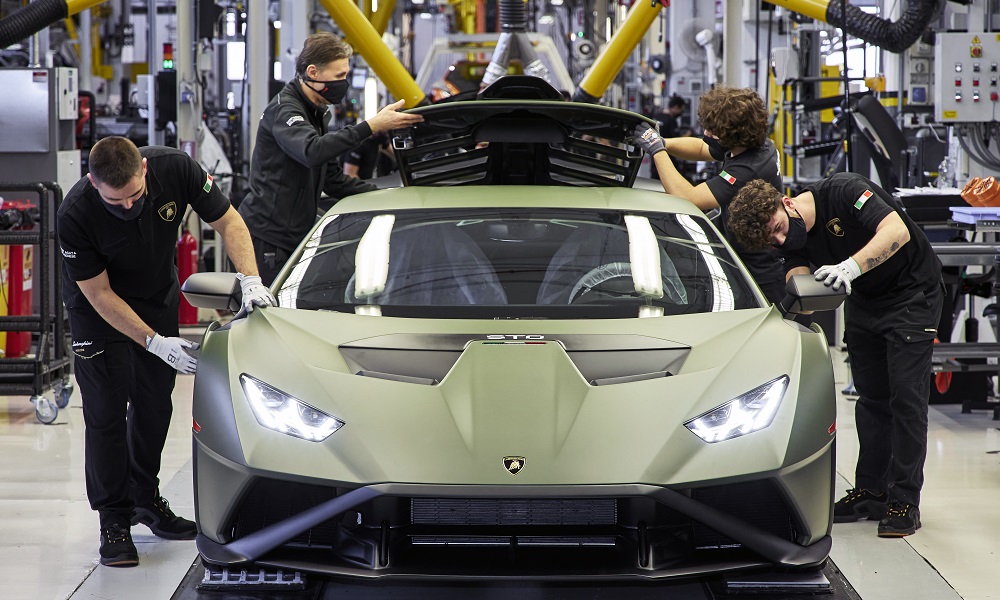
How are Lamborghini suppliers selected? What are the necessary indicators and other requirements?
We place great importance on checking the financial reliability and sustainability of our suppliers and their supply chains. While the economic side of things must be considered, at the same time we’re having to deal with significant financial strain caused by the series of global crises that we’ve seen in recent years. As well as the margins, we now also look very closely into the solidity of our suppliers. The increasingly partnership-like nature of the relationships that we tend to establish enables them to learn about our requirements from the very beginning and optimise future supplies in terms of times and costs. In addition to financial stability, we also pay close attention to development performance and innovations, quality and logistics in terms of delivery security.
One of the keys to the success and high standards of the Lamborghini procurement strategy is the balanced blend between extremely well-organized big suppliers with connections to the Volkswagen Group that can provide certain forms of technology or specific components, and a number of smaller but highly specialized suppliers that can provide specific products for the unique Lamborghini manufacturing systems.
Lamborghini is part of the Volkswagen Group. In terms of synergy, what are the greatest benefits that this brings to the supply chain?
There are considerable advantages to being part of a group like Volkswagen and this is demonstrated by situations such as the semiconductor shortage. Lamborghini has one of the highest contribution margins in the group, so it is prioritized when it comes to supplies. In addition, the group gives us access to a number of forms of technology that play a crucial role in our evolution
From current challenges to future prospects: at present, Lamborghini is reorganising stock management along its supply chain because it realizes that in the future the biggest risk of irregular supplies will be with the core materials and components, which play the most decisive role in the whole production cycle.
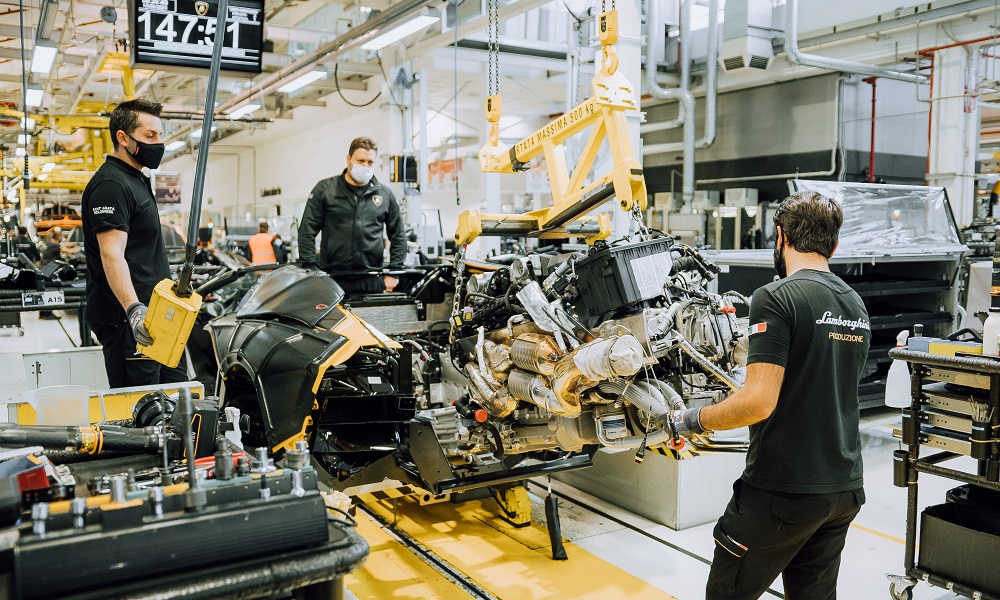
Globalisation as we know it is set to change. Many economists and historians are talking about a decline in globalisation and the start of a deglobalization trend. What’s your point of view on the matter?
I think that phenomena like globalisation are irreversible. Numerous geographical areas contribute to the production cycles of items that are made today. In my opinion, an extreme form of deglobalization is a Utopian, short-sighted idea. I’m more of a believer in rethinking the current supply processes and outlooks, which are in any case undergoing a natural evolution in the industry due to the new circumstances.

